
Airports are among the most complex and demanding public environments in the world. With millions of passengers moving through terminals every day, every element of the airport experience must be carefully designed to support efficiency, hygiene, and long-term performance. One area that plays a critical role – yet is often overlooked – is the washroom.
Today, expectations for airport washrooms are higher than ever. Travelers expect spaces that are clean, easy to use, and aligned with modern standards of hygiene and sustainability. At the same time, airport operators must manage constant usage, reduce operational costs, and meet environmental targets.
This is where total touchless technology is redefining what airport washrooms can be.
The Role of AAAE in Shaping Airport Innovation
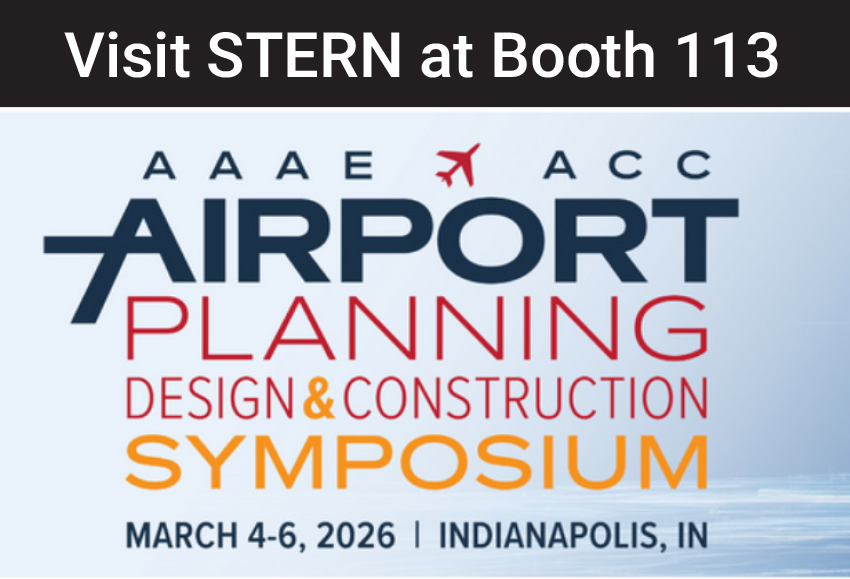
The AAAE/ACC Airport Planning, Design & Construction Symposium is one of the most influential events in the aviation industry. It brings together airport authorities, architects, engineers, and decision-makers to explore the future of airport infrastructure.
Held annually in the United States, the symposium focuses on key topics such as:
- Sustainable airport design
- Passenger experience improvements
- Infrastructure modernization
- Smart technology integration
It serves as a platform where new ideas are introduced, tested, and refined – making it a key driver of innovation across airport environments.
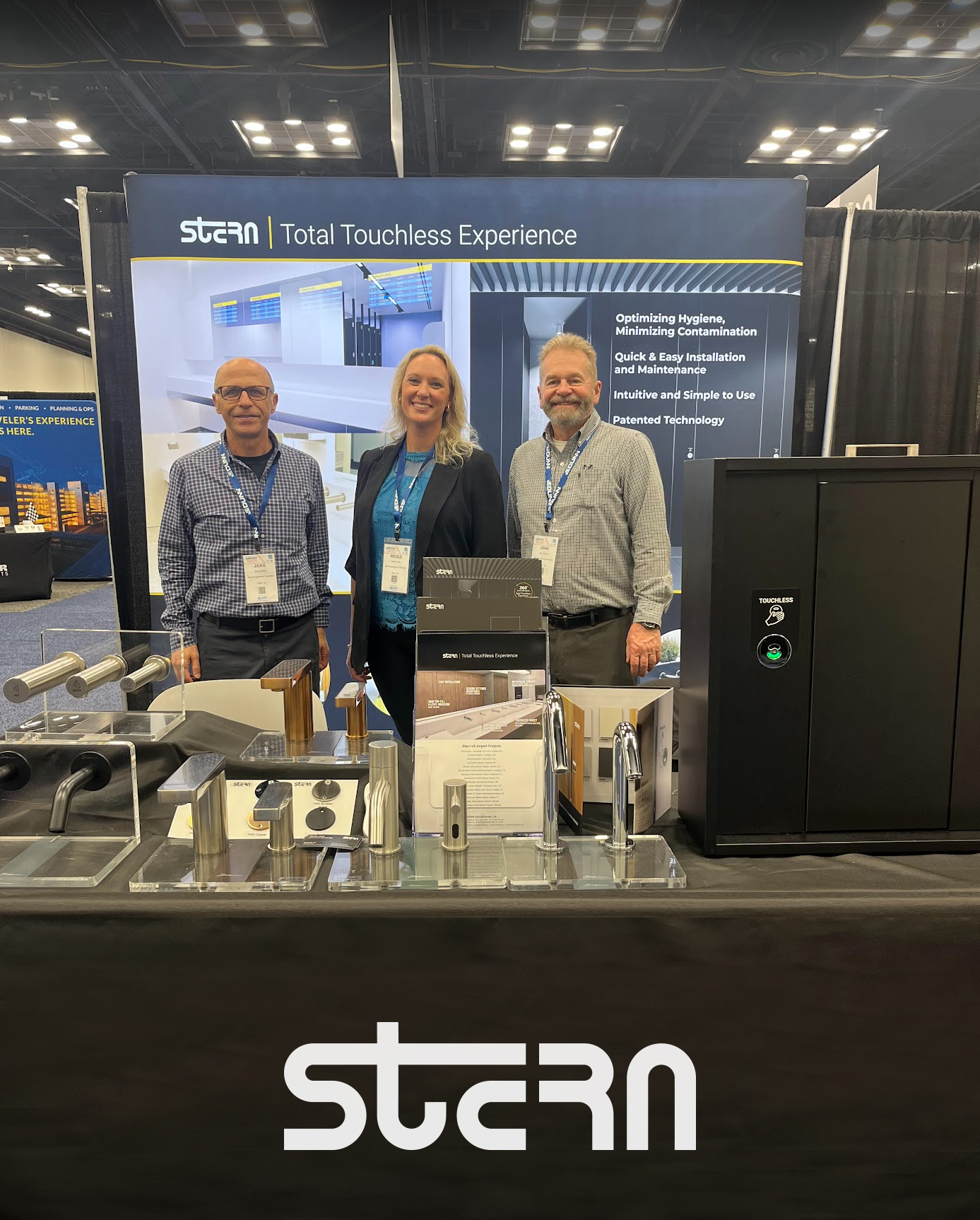
At the event in Indianapolis, companies like Stern Engineering contribute to these conversations by presenting solutions that directly address the challenges of high-traffic public spaces, particularly within washroom design.
Why Airport Washrooms Require a Different Approach
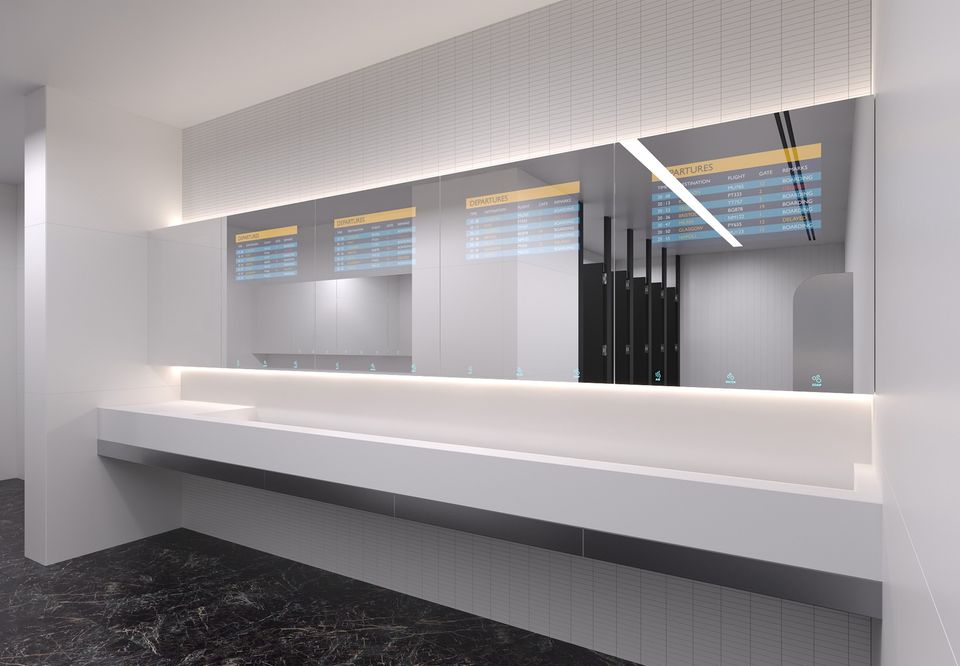
Unlike most commercial or public facilities, airport washrooms operate under extreme conditions:
- Continuous usage: Many airport washrooms operate 24/7 without downtime
- High passenger volume: Thousands of users per day in a single location
- Peak traffic surges: Sudden influxes tied to flight schedules
- Strict hygiene expectations: Global travelers expect consistent cleanliness
- Operational efficiency demands: Maintenance must be minimized without compromising performance
Traditional washroom design struggles to meet these demands. Manual fixtures create bottlenecks, increase maintenance requirements, and introduce hygiene concerns through shared contact points.
To meet modern expectations, airports are shifting toward fully automated, touch-free environments.
What is a Total Touchless Washroom Experience?
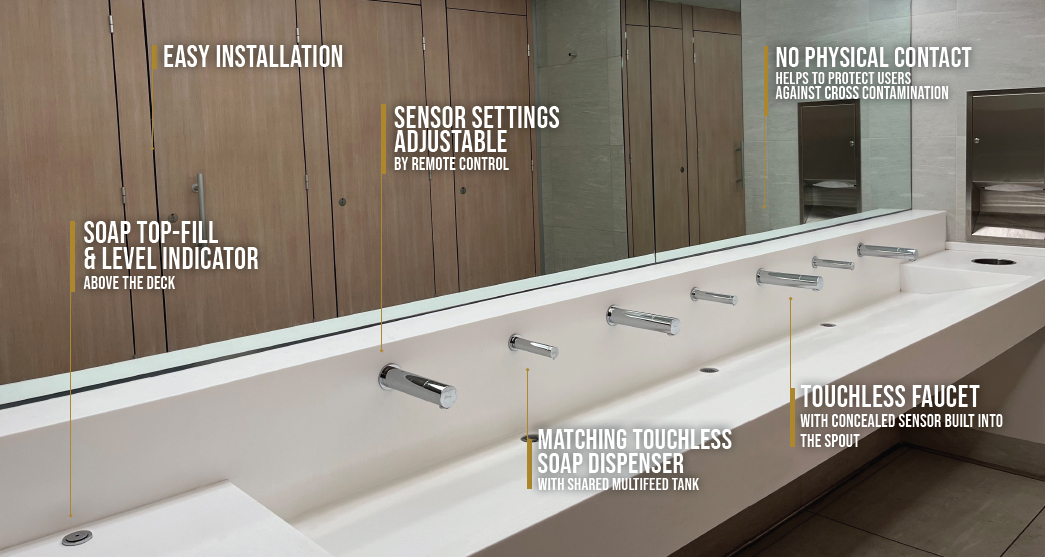
A total touchless washroom is designed so that users can complete their entire journey – from entry to exit – without physically touching surfaces.
This includes:
- Sensor-activated faucets
- Automatic soap dispensers
- Touch-free flush systems
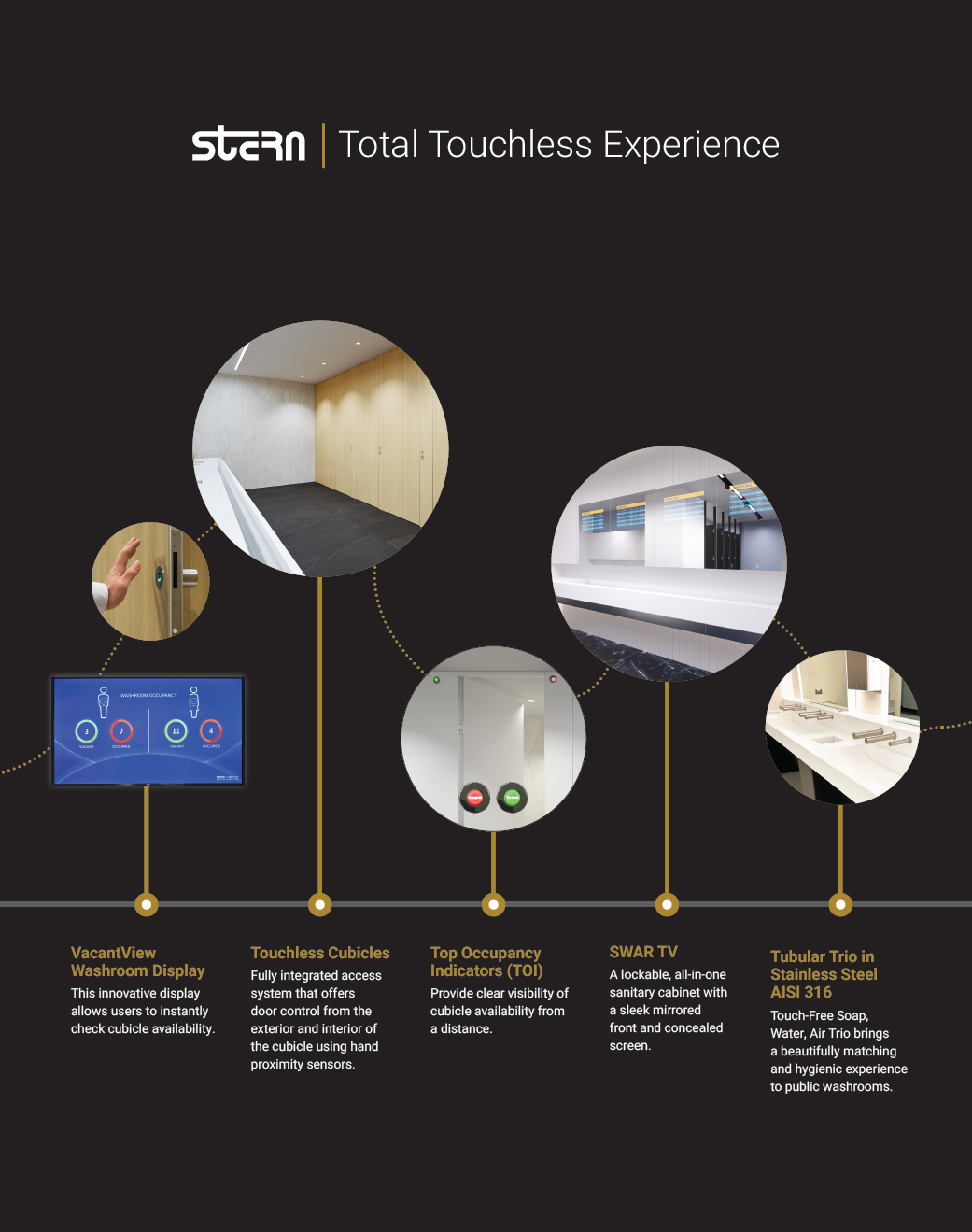
- Integrated washroom solutions
Rather than treating each fixture as a standalone element, the goal is to create a continuous, automated flow that enhances both usability and hygiene.
Stern Engineering specializes in delivering this type of complete solution, ensuring that every component works together efficiently in high-traffic environments like airports.
Improving Hygiene Through Touch-Free Design
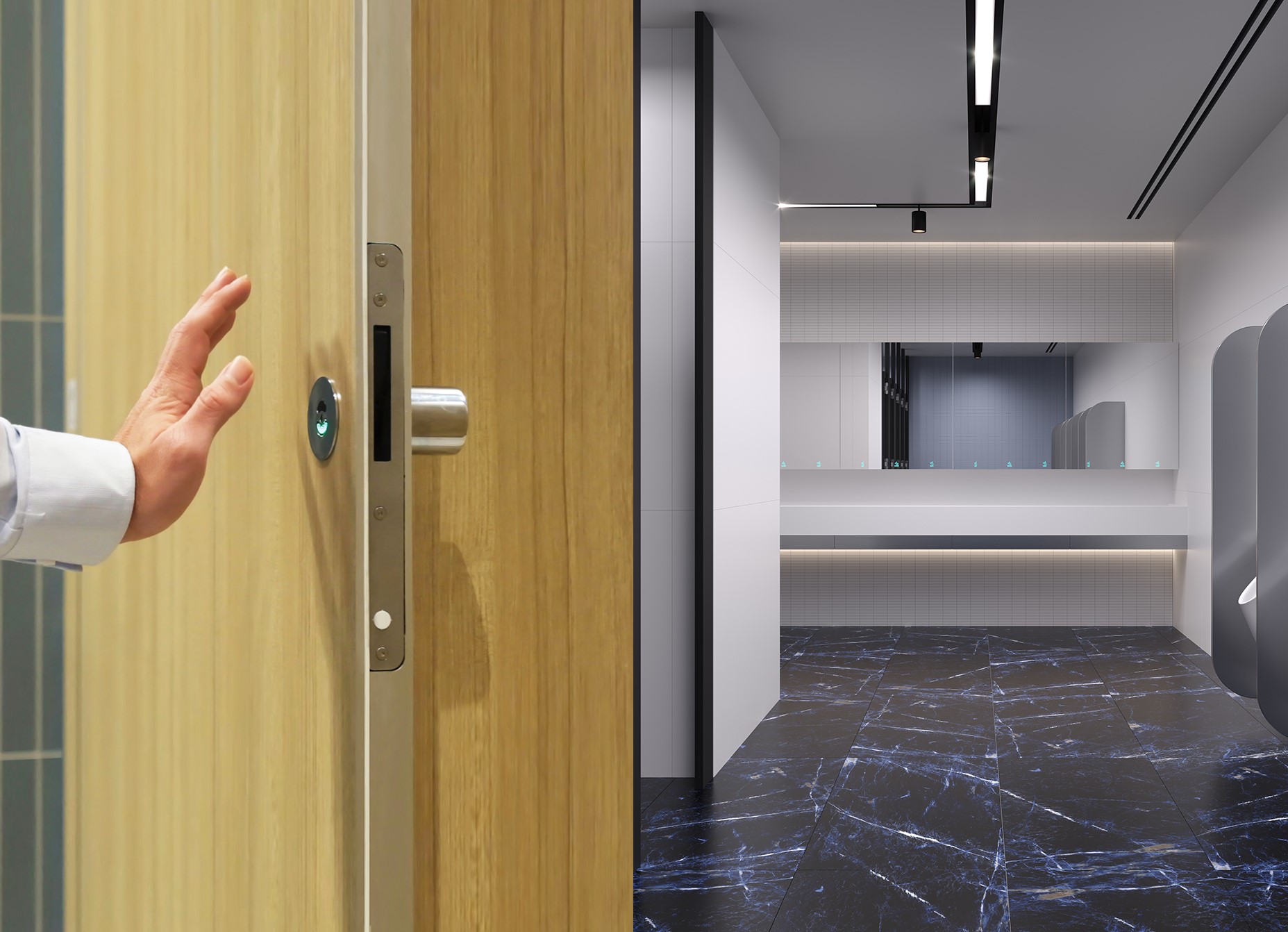
Hygiene is one of the most important considerations in any public washroom—especially in airports, where users come from all over the world.
Every physical touchpoint represents a potential source of contamination. Traditional fixtures such as manual taps, push buttons, and handles require repeated contact by hundreds or thousands of users each day.
By eliminating these touchpoints, total touchless systems help:
- Reduce cross-contamination risks
- Support cleaner surfaces throughout the day
- Create a more comfortable experience for users
Passengers are increasingly aware of hygiene standards, and touch-free environments help build trust and confidence in airport facilities.
Enhancing Passenger Flow and Efficiency
Airport design is all about movement. Long lines, congestion, and delays negatively impact the passenger experience – and washrooms are no exception.
Touch-free systems contribute to smoother flow by:
- Reducing wait times at sinks and fixtures
- Eliminating the need for manual operation
- Allowing faster transitions between users
When every function operates automatically, users spend less time interacting with each fixture. This becomes especially important during peak travel times, when washrooms must accommodate large numbers of passengers quickly.
The result is a more efficient environment that supports the overall rhythm of the airport.
Supporting Sustainability Goals in Airports
Sustainability is a major focus across the aviation industry. Airports are actively working to reduce their environmental impact, and washrooms are a key area where meaningful improvements can be made.
Total touchless systems contribute to sustainability by:
- Controlling water usage through precise activation
- Reducing waste from overuse or user error
- Supporting long-term resource management
Sensor-based technology ensures that water flows only when needed, helping to prevent unnecessary consumption. Over time, this leads to significant savings in both water and operational costs.
For airports pursuing environmental certifications or sustainability benchmarks, these systems play an important role in achieving their goals.
Designed for Reliability in High-Traffic Environments
Airport washrooms do not have the luxury of downtime. Systems must perform consistently under constant use, often in challenging conditions.
Stern Engineering designs its solutions with durability and reliability in mind, ensuring they can:
- Handle continuous operation
- Maintain performance over time
- Reduce the frequency of maintenance interventions
Reliable systems are essential not only for operational efficiency but also for maintaining a positive passenger experience.
A System-Based Approach to Washroom Design
One of the key differences in modern airport washroom design is the shift from individual products to integrated systems.
Instead of selecting fixtures separately, designers and planners are now looking at how the entire space functions as a whole.
Stern Engineering supports this approach by offering solutions that work together to create:
- A consistent user experience
- Streamlined maintenance processes
- Optimized performance across all touchpoints
Stern Engineering’s Role in Airport Projects Across North America
With extensive experience in airport projects, Stern Engineering understands the unique challenges these environments present.
Stern’s solutions have been implemented in major airport facilities across North America, including:
- JFK Airport (Terminals 8, 4 & 6), Queens, NY
- LaGuardia Airport, Queens, NY
- Newark Airport (Terminal A), NJ
- Portland Airport, OR
- Denver International Airport, CO
- George Bush Intercontinental Airport, Houston, TX
- Dallas Airport Skylink (Terminals A & C), TX
- San Francisco Airport (Air France Lounge), CA
- Sacramento International Airport, CA
- Pittsburgh International Airport, PA
- Rhode Island T.F. Green International Airport, RI
- Sarasota International Airport, FL
- Destin–Fort Walton Beach Airport, FL
- Quebec International Airport, Canada
- Montréal–Pierre Elliott Trudeau International Airport, Canada
These projects demonstrate Stern’s ability to deliver reliable, touch-free solutions in some of the most demanding public environments.
Meeting the Expectations of Modern Travelers
Today’s travelers expect more from airport facilities than ever before. Cleanliness, ease of use, and efficiency are no longer optional – they are standard requirements.
Touchless washrooms align with these expectations by providing:
- A modern, intuitive experience
- Reduced interaction with shared surfaces
- Faster, more convenient usage
The Future of Airport Washrooms
As airports continue to evolve, washroom design will play an increasingly important role in shaping the passenger experience.
Key trends include:
- Greater adoption of automation
- Increased focus on sustainability
- Integration of smart technologies
- Emphasis on user-centered design
Conclusion
Airport washrooms are no longer just functional spaces – they are a critical part of the overall travel experience.
By embracing total touchless technology, airports can:
- Improve hygiene standards
- Enhance passenger flow
- Support sustainability initiatives
- Ensure long-term reliability
Stern Engineering continues to support this shift by delivering solutions designed specifically for the realities of modern airport environments.